Species Information
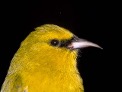
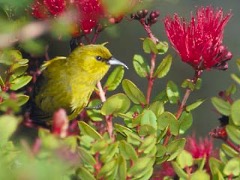
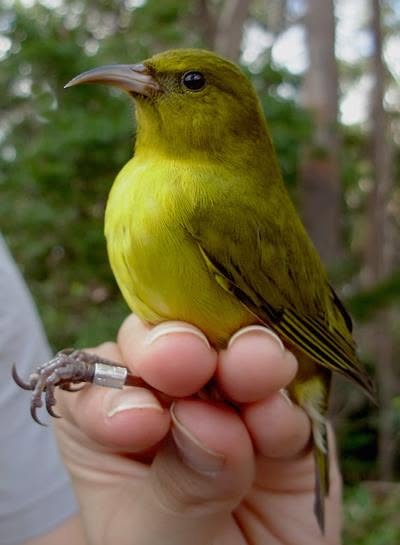
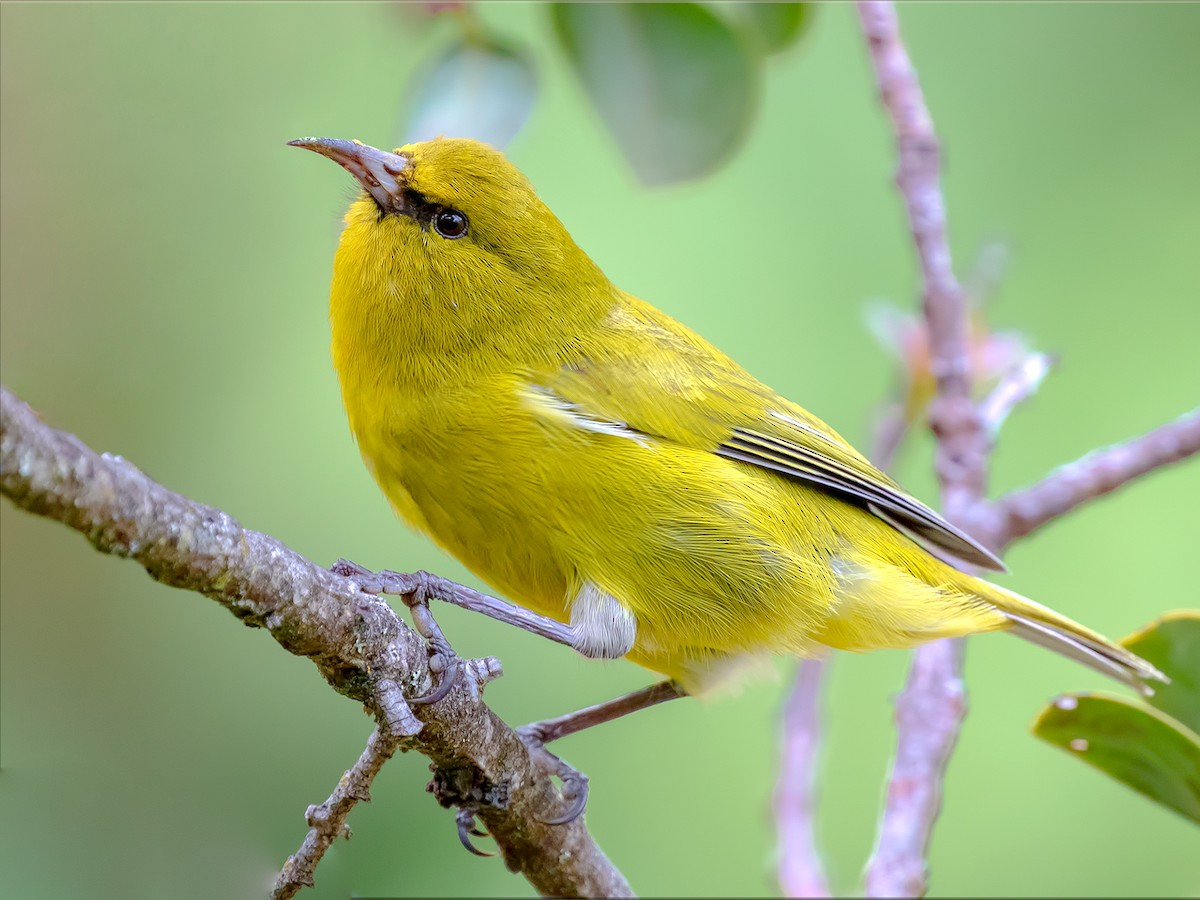
The Hawaii ʻAmakihi (Chlorodrepanis virens) is one of the most common native honeycreepers remaining in the Hawaiian Islands. Unlike many of its counterparts, the ʻAmakihi has shown a remarkable, inspiring resilience to environmental shifts and avian diseases.
Diet & Anatomy
Equipped with a steep, curved bill, they are master foragers feeding on nectar, volcanic tree sap, and small canopy insects.
Habitat Range
They can be found thriving from high-elevation subalpine forests down to warm, coastal valleys across Hawaiʻi, Maui, and Oʻahu.
Disease Resistance
Crucial to avian science, certain low-elevation populations are evolving an extraordinary genetic resistance to avian malaria.
Photo Gallery
Geographic Song Dialects
Beyond their physical resilience, ʻAmakihi populations display fascinating cultural variations. Use the map below to listen to how their song dialects shift dynamically across the island chain.
Select an island marker on the map to load a dialect sample
Citizen Science: Submit an Audio Sample
Are you out in the field? Help map vocal shifts by contributing your own recordings of ʻAmakihi vocalizations or songs to our repository.